
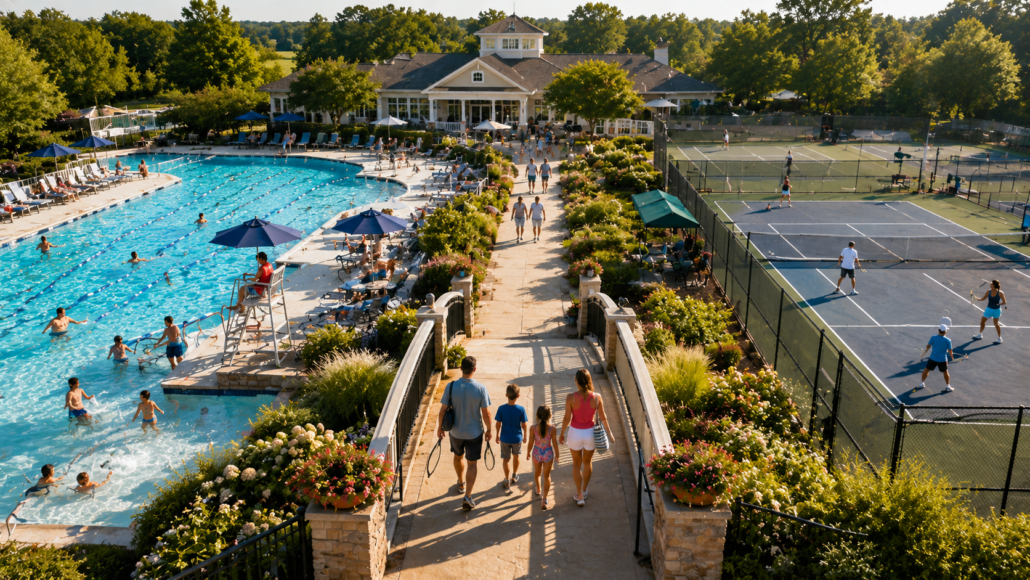
Swim and Tennis Club Membership Software: Top Choices for 2026
If your club has both a pool and tennis courts, you already know the problem: most membership software was built for one or the other. The gym platforms handle courts. The aquatics platforms handle lanes. And somewhere in the middle, your volunteer board is duct-taping together three separate tools just to run a single summer season.
This guide cuts through the noise. We’ve compared the leading platforms on the market in 2026 — not just for swim clubs and not just for tennis clubs, but for the specific operational reality of facilities that run both. You’ll find a full comparison matrix, honest per-platform breakdowns, a decision framework for your board, and every data point you need to make a confident choice before the season opens.
Quick answer: For volunteer-run community swim and tennis clubs, HOAs, and pool management companies, Member Splash is the only platform built from the ground up for dual-amenity operations. CourtReserve leads for racquet-heavy clubs where courts drive daily activity. Club Automation serves large multi-sport campuses with professional management staff. Everything else involves significant compromise.
The Dual-Amenity Problem: Why Most Club Software Falls Short

Walk into a typical community swim and tennis club on a Saturday morning in July and you’ll find two completely different operational realities happening simultaneously. At the front gate, a lifeguard is scanning member photo IDs, verifying guest passes, and managing a line of families trying to get to the pool. Fifty feet away, a member is showing up for a court reservation, frustrated because the booking system is a separate app that doesn’t talk to their pool membership account.
This is the dual-amenity problem — and it’s why so many clubs end up running two platforms, or one deeply compromised platform that handles one amenity well and the other badly.
The operational differences between pool management and court management are significant:
- Access logic is different. Pool access is typically household-based — a family membership covers everyone in the account. Court reservations are often individual or couple-based with time limits, booking windows, and level restrictions.
- Guest handling is different. Pool guest passes are tracked per-visit, often pre-purchased in bulk, and tied to a household account. Tennis guests may need separate court time added to a reservation.
- Member types are different. Many clubs offer pool-only memberships, tennis-only memberships, and full memberships — each with different access permissions, pricing tiers, and communication preferences.
- Seasonal rhythms are different. The pool opens Memorial Day and closes Labor Day. Courts may be available year-round. Billing cycles, renewal timing, and waitlist management need to reflect both.
- Staff workflows are different. The front gate needs instant photo ID verification. The court booking system needs availability calendars, booking limits, and event blocking for leagues and clinics.
Software designed for one of these use cases — even very good software — will force you to work around its limitations for the other. The clubs that run smoothest are the ones that found a single platform designed to handle both.
Why Generic Membership Software Fails Swim and Tennis Clubs
Generic membership platforms — the kind built for gyms, nonprofits, professional associations, or recreation centers — tend to fail swim and tennis clubs for a few consistent reasons:
- No built-in photo ID check-in designed for outdoor seasonal gate operations
- No guest pass system that tracks bulk purchases, remaining passes, and gate verification in one workflow
- No waitlist automation designed for a fixed membership cap with multi-year demand
- Per-member pricing that penalizes growth and creates unpredictable costs for volunteer boards
- Setup timelines measured in months, not days — incompatible with a club that opens in May
- Support teams that have never run a swim or tennis club and can’t troubleshoot your specific workflows
The clubs that struggle most are the ones that chose a platform based on a feature checklist rather than operational fit. A system can have “reservations” and still be completely unworkable for court management at a seasonal community club. A system can accept payments and still be inadequate for the specific billing complexity of family memberships with age-based tiers and early-bird discount windows.
What follows is a platform-by-platform breakdown of who actually built for this use case — and who is adapting general-purpose software to a problem it wasn’t designed to solve.
What Swim and Tennis Clubs Actually Need: The Evaluation Criteria

Before comparing platforms, it’s worth being precise about what a dual-amenity club actually needs. The checklist below reflects the operational reality of volunteer-run community swim and tennis clubs, HOA pools with court amenities, and pool management companies overseeing facilities with both.
Non-Negotiable Features
1. Dual-Amenity Access Control
The system must handle pool-only members, tennis-only members, and full members with different access permissions — automatically, at the gate, without staff having to look anything up. Members who pay for pool access shouldn’t have court reservation visibility. Full members should see both. The system should enforce this without manual management.
2. Photo ID Check-In at the Pool Gate
This is non-negotiable for pool operations. Scanning a member’s digital pass should instantly display their name, photo, payment status, and household members. Unauthorized entries — the single largest source of lost revenue at community pools — are stopped before they happen, without confrontation. A system without native photo check-in requires a workaround that typically means a second tool or a manual process.
3. Court Reservation System with Rules Enforcement
Courts need a booking calendar with availability visible to members in real time, booking limits per account per day or week, event blocking for leagues, clinics, and tournaments, and the ability to restrict reservations by membership type. “Reservation hogs” — members who book every available slot — are one of the most common complaints at tennis clubs. The system needs to prevent this automatically.
4. Guest Pass Management Across Both Amenities
Guest passes should be purchasable online in bulk before arrival, trackable per household account, and verifiable at the gate alongside the member check-in. A system that handles pool guests but not court guests — or that requires separate workflows for each — creates administrative overhead and revenue leakage.
5. Seasonal Billing with Household Account Structure
Swim and tennis clubs are built around families. The billing system needs to support a single primary account with multiple household members, age-based pricing tiers (adult, junior, senior, etc.), early-bird discount windows, late fees, payment plans, and ACH/credit card processing. Clubs that move to online payment portals typically see a 20–35% reduction in late or missing payments within the first renewal cycle.
6. Waitlist Automation
Popular clubs carry multi-year waitlists. The software should automatically notify the next family when a spot opens, track their response, and convert them to a paid membership without staff involvement. Manual waitlist management — email chains, phone calls, spreadsheet tracking — is one of the highest-friction administrative tasks at a seasonal club.
7. Volunteer-Friendly Administration
Most community swim and tennis clubs are governed by rotating volunteer boards who have full-time jobs. The platform cannot require a technical background, cannot demand hours of configuration per week, and must transfer cleanly when a board member steps down. Digital record-keeping, historical payment logs, and centralized member data mean the next volunteer inherits a working system, not a binder.
8. Setup Speed Measured in Days, Not Months
A club that opens May 24th cannot start a software implementation in April and expect to be live by Memorial Day if the vendor’s onboarding timeline is 8–12 weeks. Purpose-built platforms for this market segment complete setup in 5–12 days. Enterprise platforms designed for large health clubs or country clubs often require months of implementation work that seasonal clubs simply cannot afford in time or budget.
Important But Secondary Features
- Member self-service portal: Members manage their own accounts, purchase guest passes, make reservations, and pay dues without contacting staff
- Bulk email and communications: Send targeted messages to pool-only members, tennis-only members, or the full club by membership type
- Mobile / PWA access: Staff and members access the system from any device; no app store download required
- Reporting and analytics: Attendance trends, revenue summaries, peak usage data for staffing decisions
- Event management: Swim meets, tennis leagues, social events, and lessons bookable through the same platform
- POS for snack bar and pro shop: Cashless transactions billed to member accounts
- Staff scheduling: Lifeguard and court staff shift management connected to the membership platform
2026 Swim and Tennis Club Software Comparison Matrix
The table below evaluates the leading platforms across the criteria that matter most to dual-amenity clubs. Ratings reflect how well each platform serves the community swim and tennis club use case specifically — not general-purpose club or gym management.
| Platform | Core Focus | Pool Check-In | Court Reservations | Guest Passes | Pricing Model | Setup Time | Best For |
|---|---|---|---|---|---|---|---|
| Member Splash ⭐ | Swim & tennis clubs, HOAs, pool management companies | ✅ Native photo ID | ✅ Full rules enforcement | ✅ Bulk purchase + gate tracking | Flat annual fee | 5–12 days | Volunteer-run community swim/tennis clubs, HOAs |
| CourtReserve | Advanced court scheduling, match-making, clinics | ❌ Not designed for pool gate ops | ✅ Best-in-class | ⚠️ Limited | Per-member monthly | Moderate | Racquet-heavy clubs where courts drive daily activity |
| Club Automation | Enterprise multi-sport campus management | ✅ Supported | ✅ Supported | ✅ Supported | Enterprise (custom) | Weeks to months | Large multi-sport complexes with full-time staff |
| TeamSnap / SportsEngine | Youth competitive team management | ❌ Not designed for community gate ops | ⚠️ Basic scheduling only | ❌ Not a core feature | Per-member | Fast | Competitive swim/tennis teams, parent-run youth orgs |
| Wild Apricot | General nonprofit and association membership | ❌ No native photo check-in | ⚠️ Generic event booking only | ❌ Not a core feature | Per-member tiered | Moderate (heavy config) | General membership orgs; not aquatic or court facilities |
| ClubExpress | Multi-purpose club management | ❌ No built-in photo check-in | ⚠️ Limited, requires configuration | ⚠️ Limited automation | Per-member monthly | Moderate (heavy config) | Professional associations; significant config for swim/tennis use |
| PoolDues | Basic pool dues collection | ❌ iOS only | ❌ iOS only – limited | ❌ No guest pass system | PayPal-dependent – Flat annual fee | Fast | Very small clubs needing dues collection only; not dual-amenity |
✅ = Native feature built for this use case | ⚠️ = Available with limitations or configuration | ❌ = Not supported or requires a separate tool
In-Depth Platform Reviews
Member Splash — Best Overall for Swim & Tennis Clubs

Member Splash is the only platform on this list built exclusively for swim clubs, tennis clubs, HOAs with aquatic and court amenities, and pool management companies. Founded in 2010 by Jamie Currie — whose brother ran a pool management company in Montgomery County, Maryland, and needed a digital alternative to paper applications and checks — Member Splash has spent fifteen years solving the specific operational problems that community clubs face.
Today, Member Splash serves 470+ clubs across 30+ states with a ~98% customer retention rate. The platform has processed over $108 million in member payments and facilitated more than 6.65 million check-ins. Those numbers aren’t marketing stats — they’re evidence of what happens when software is designed for one specific market and stays focused on it for a decade and a half.
Dual-Amenity Management
Member Splash handles pool and tennis operations from a single platform with a single member login. Pool-only members see aquatic features. Tennis-only members see court reservation tools. Full members see both. This permission structure is configured out of the box — no custom development required.
Court reservations are built into every plan at no additional cost. Members log in to their existing portal, select a court, view the live availability calendar, and book for themselves and their guests. Admins set booking limits per account, per day, per week, or per month. Event blocking prevents double-booking during leagues, clinics, tournaments, and private parties. The front desk sees all reservations in real time and can update, override, or cancel bookings instantly.
Pool check-in is equally purpose-built. Scanning a member’s digital pass or ePass at the gate displays their photo, payment status, membership type, household members, and remaining guest passes in real time. Staff can approve or flag a member in seconds without confrontation. Guest passes can be purchased in bulk online before arrival, deducted automatically at check-in, and tracked per household.
“Member Splash has not only stopped misuse of memberships with photo IDs, but it has also streamlined payments and reservations. Guest passes can now be purchased in bulk with no lost revenue, and event registration and payments are all in one place.” — Ryan Wenstrup-Moore, Mt. Lookout Swim Club
Built for Volunteer Boards
The flat-fee pricing model is not incidental — it’s a deliberate design choice for the volunteer-run club market. When a new treasurer takes over in October, they inherit a predictable annual fee. The software cost doesn’t spike as the club adds members, doesn’t require renegotiation, and doesn’t create budget surprises.
Board transitions are further smoothed by centralized digital record-keeping. Every waiver, payment, membership record, and communication history lives in the platform. When a volunteer steps down after three years, the next person doesn’t get a banker’s box — they get a clean dashboard with full history intact.
2026 Platform Updates — 12 New Features Live
- Workforce Scheduler: Build and manage staff schedules for lifeguards and court staff across multiple locations, connected directly to the membership platform
- Pay-Per-Use Reservations: Let members book lanes, courts, or pool time and pay as they go — admins control availability, pricing, and access restrictions
- Splash Cards: Prepaid accounts tied to member profiles for cashless snack bar and pro shop transactions — members give their name at the counter, no card required
- Progressive Web App (PWA): An installable app experience for members and staff without requiring an app store download
- Day Passes: Sell single-day or multi-day access passes online — useful for municipal facilities, drop-in programs, and community events
What to Consider
Member Splash is not the right fit for clubs where tennis courts are the overwhelming primary driver of daily operations — say, a racquet club that added a splash pad. For high-volume, racquet-first facilities running advanced match-making, league ladders, and clinic point-of-sale at scale, CourtReserve’s deeper court-specific toolset may be a better fit. Member Splash’s court tools are robust for the community club context — they are not built for the competitive racquet club context.
CourtReserve — Best for Racquet-First Clubs
CourtReserve is the premier platform for clubs where the tennis courts — or pickleball courts — are the center of daily activity. Its court scheduling engine is genuinely best-in-class: dynamic pricing, booking rule enforcement, match-making, league ladder management, and clinic registration with point-of-sale are all deeply developed features.
The limitation for combined swim and tennis clubs is significant: CourtReserve was not designed for pool operations. There is no native photo ID check-in system built for outdoor pool gate management, no guest pass system designed for bulk pool day tracking, and no seasonal community membership billing model designed around household accounts and flat-fee renewals. Clubs that have tried to use CourtReserve for both amenities typically report needing a second system for pool operations — which is the exact problem a dual-amenity platform is meant to solve.
The per-member pricing model also warrants attention for community clubs. As membership grows — which is the goal — software costs scale proportionally. For a volunteer board managing a fixed annual budget, this creates unpredictable year-over-year cost exposure that flat-fee platforms avoid entirely.
Club Automation — Best for Enterprise Multi-Sport Campuses
Club Automation is a heavy-duty enterprise platform designed to connect every aspect of a multi-sport campus: point-of-sale, digital waivers, recurring billing, marketing automation, staff scheduling, childcare, and more — all in a unified system. It is purpose-built for large health clubs, athletic complexes, and private country clubs that have full-time administrative teams and the IT resources to support a months-long implementation process.
For the community swim and tennis club market, Club Automation is almost always the wrong choice — not because it’s a bad platform, but because it’s massively over-engineered for the use case. A volunteer board running a 400-family neighborhood pool and six tennis courts does not need enterprise-level POS, childcare management, or marketing automation suites. Club Automation’s implementation complexity and pricing far exceed what volunteer-run community clubs need or can sustain.
TeamSnap for Business / SportsEngine — Best for Competitive Youth Teams
TeamSnap and SportsEngine are built for one thing: managing competitive youth sports teams. Roster management, meet scheduling, swim heat sheets, match draw brackets, parent communication, and USA Swimming integration are their core competencies.
For community swim and tennis clubs, they fall short in almost every operational dimension that matters: no household membership model, no pool gate check-in, no seasonal billing with waitlists, no court reservation system designed for community use, no guest pass management. They are team management tools, not facility management tools. The distinction matters enormously in day-to-day operations.
Wild Apricot — Best for General Membership Orgs
Wild Apricot is a capable general-purpose membership platform. For swim and tennis clubs, it’s a poor fit for a straightforward reason: it was not designed for aquatic or court facility operations. The features that matter most to this market — photo ID check-in, guest pass management, court reservation with booking rules, seasonal household billing — are either absent or require significant custom configuration to approximate.
Wild Apricot is a reasonable choice for a membership organization that happens to have a pool; it is not a reasonable choice for a pool club that happens to have members.
ClubExpress — Best for Professional Associations
ClubExpress offers solid core functionality: member database management, online registration, event management, and communication tools. For swim and tennis clubs specifically, its limitations are consistent: no built-in photo check-in for pool gate operations, limited guest pass automation, and general-purpose design that requires significant configuration before it resembles a swim club management system.
The per-member pricing model creates year-over-year cost variability that flat-fee platforms eliminate entirely.
PoolDues — For Very Small Clubs Only
PoolDues does one thing: collect pool membership fees online via PayPal. For any club running both a pool and tennis courts, it is not a viable platform — there is no check-in system, no court reservation functionality, no guest pass management, and no member portal beyond payment processing.
The PayPal dependency deserves specific mention. In exit data from clubs that have left their previous platforms to join Member Splash, PoolDues’ PayPal-only payment model is the single most cited driver of churn — members encounter friction with PayPal accounts, payment failures go unresolved, and clubs lose revenue they never knew they missed.
The Swim and Tennis Club Software Decision Framework
Before calling a sales team or starting a trial, answer these four questions. They will eliminate most options and point clearly to the right platform for your club’s specific situation.
Question 1: What drives the majority of your daily member activity?
- The pool drives most activity (swimming, lap lanes, recreational swim, family pool days): You need a pool-first platform. Member Splash was built for this.
- The courts drive most activity (tennis leagues, clinics, match-making, pickleball): CourtReserve’s deeper racquet-specific toolset warrants consideration.
- Both are roughly equal: You need a true dual-amenity platform. Member Splash is the only purpose-built option in this category.
Question 2: Is your club volunteer-run or professionally managed?
- Volunteer board (most community swim and tennis clubs): You need fast setup, simple administration, flat-fee pricing, and support from people who understand your operational reality. Member Splash was designed for exactly this.
- Professional management staff with dedicated admin resources: Club Automation’s deeper feature set and enterprise tooling may justify its implementation complexity and cost.
Question 3: How many member households do you serve, and how fast are you growing?
- Under 600 households: Per-member pricing models can be evaluated on features alone — the cost difference vs. flat-fee is moderate.
- 600+ households or active waitlist: Flat-fee platforms become significantly more cost-effective. Per-member pricing at scale means your software costs increase every year as you add the members you’ve been waiting years to serve.
Question 4: When does your season open, and when are you starting this process?
- Opening in under 30 days: You need a platform with a 5–12 day setup window. Member Splash’s onboarding team handles data migration, configuration, and training within that window. Enterprise platforms cannot.
- Planning ahead (3+ months before season): More options are viable, but purpose-built platforms will still deliver a smoother season than generic software configured for the use case.
The Short Answer
- 🏊 Volunteer-run community swim and tennis club → Member Splash
- 🎾 Racquet-only club, courts are 80%+ of operations → CourtReserve
- 🏢 Large multi-sport campus with full-time staff → Club Automation
- 👦 Competitive youth swim or tennis team → TeamSnap or SportsEngine
- 🏛️ General nonprofit with a pool → Wild Apricot or ClubExpress (with significant configuration)
Why Flat-Fee Pricing Matters for Swim and Tennis Clubs

Pricing model is one of the most underrated considerations in software selection — especially for volunteer-run clubs operating on fixed annual budgets with no dedicated IT or finance staff.
Most club management platforms charge on a per-member basis: a monthly fee multiplied by the number of active members. On the surface, this sounds fair. In practice, it creates several problems for seasonal community clubs:
1. Costs Scale Against Your Success
The whole point of a waitlist is to grow your membership. When you finally open spots and bring in twenty new families, per-member pricing means your software bill goes up. You’ve done everything right — you grew your club — and your reward is a higher monthly payment. Flat-fee pricing eliminates this dynamic entirely. Your software costs stay fixed whether you have 200 member households or 600.
2. Budget Volatility Is a Board Problem
Community swim and tennis clubs are typically structured as non-profit organizations governed by volunteer boards. Treasurers change. Board priorities change. The software budget is set during an October planning meeting for a club that opens in May. Per-member pricing creates a variable that’s hard to forecast accurately. Flat-fee pricing is a single line item on the annual budget. Done.
3. Board Transitions Are Already Hard Enough
When a treasurer steps down, their successor inherits every vendor relationship, login, and pricing agreement. Per-member models require periodic review to ensure the club isn’t paying for more or fewer members than its current roster reflects. Flat-fee agreements are simple: one number, one annual payment, no reconciliation required.
4. No Surprise Invoices During Your Busiest Month
Registration season — typically February through April — is the most administratively demanding period for swim and tennis clubs. It’s also when per-member software costs spike as renewals are processed and new members are added. Flat-fee billing means opening day doesn’t come with an unexpected software invoice on top of everything else.
Member Splash’s flat-fee model was a deliberate architectural choice, not an accidental pricing strategy. Essentials+ is $2,000 per year with a $500 setup fee. Premium is $3,500 per year with a $1,500 setup fee. No per-member charges. No add-on modules. No transaction fees layered on top of payment processing. The price you see is the price you pay.
Real-World Data: What Member Splash Clubs Report
Claims are easy. The numbers behind fifteen years of serving swim and tennis clubs are harder to argue with.
Active clubs across 30+ states
Customer retention rate
In member payments processed annually
Check-ins facilitated annually
Years serving the aquatic club market
Days to full setup and go-live
What Clubs Say After Making the Switch
“End of season clean up took only one day instead of a week. No more printing envelopes and bills while taking down the Christmas tree — or worrying where to buy $700 worth of stamps.”
“We switched to Member Splash in 2017 and have never looked back. It’s by far the easiest registration system we’ve ever used. The support staff is responsive, professional, and always kind. The level of service and care they provide makes the whole experience truly priceless.” — Member Splash club administrator
“We absolutely love everything Member Splash has to offer. It has completely transformed our ability to track membership, manage events and fundraisers, and even run our snack bar with the POS interface. Most importantly, Member Splash has made our processes easier for members, staff, and volunteers.”
Additional Benchmarks from the Field
- One club collected over $100,000 in member dues on its first day of online billing after switching to Member Splash
- Clubs that move to online payment portals typically see a 20–35% reduction in late or missing payments within the first renewal cycle
- Modern club management software reduces administrative hours by an estimated 65% compared to manual processes
- Clubs report end-of-season cleanup dropping from a full week to a single day after implementing a centralized platform
- Facilities that move 95% of program registration online have eliminated overtime costs associated with manual registration processing
Frequently Asked Questions
Can one platform really handle both swim and tennis club operations?
Yes — but only if it was designed to. Member Splash was built specifically for facilities that manage both a pool and court sports, with permission tiers that distinguish pool-only, tennis-only, and full members; a court reservation system included in every plan; and a pool gate check-in system that handles photo ID verification, guest passes, and household account management simultaneously. Generic platforms require significant workarounds to approximate this. Purpose-built platforms handle it natively.
What is the difference between Member Splash and CourtReserve?
Member Splash was built for community swim and tennis clubs — volunteer-run facilities with seasonal pool operations, household memberships, guest pass management, and waitlists. CourtReserve was built for racquet-focused clubs where court scheduling, match-making, and clinic management are the primary operational drivers. If your club’s daily activity is primarily pool-based or evenly split between pool and courts, Member Splash is the better fit.
How much does swim and tennis club membership software cost?
Costs vary significantly by pricing model. Member Splash charges a flat annual fee: Essentials+ at $2,000/year (plus $500 setup) and Premium at $3,500/year (plus $1,500 setup) — no per-member charges. Per-member platforms like CourtReserve, Wild Apricot, and ClubExpress charge monthly fees that scale with membership size, which can represent meaningful cost differences for clubs with 400+ households.
How long does setup take?
Member Splash completes full setup in 5–10 days for Essentials+ and 10–12 days for Premium — including data migration, configuration, and training. Enterprise platforms like Club Automation typically require weeks to months. If your season opens in under 30 days, purpose-built platforms with dedicated onboarding teams are the only viable option.
Does Member Splash handle HOA pools with tennis courts?
Yes. HOA facilities are a primary use case for Member Splash. The platform manages resident versus non-resident access distinctions, handles amenity reservations for pools and courts, integrates with or supplements existing HOA dues billing systems, and enforces community rules at the gate through photo verification. Member Splash can function as a standalone facility management platform alongside your existing HOA management system.
What happens when our volunteer board changes?
With Member Splash, all member data, payment history, waivers, communications, and configuration live centrally in the platform. When a board member steps down, their successor logs in with new credentials and inherits a complete, organized system — not a collection of exported spreadsheets and paper files. The flat-fee pricing agreement is also simple to transfer: no per-member reconciliation, no pricing negotiation, no contract complexity.
Is there swim and tennis software with no per-member fees?
Member Splash is the primary platform in this market segment that uses a flat-fee annual pricing model rather than per-member monthly billing. Essentials+ and Premium are fixed annual fees regardless of membership size — making it particularly valuable for clubs with active growth plans, large waitlists, or volunteer boards that prefer predictable annual budgets.
What features should a dual-amenity club prioritize first?
In order of operational impact: (1) Photo ID check-in at the pool gate — stops unauthorized entries immediately. (2) Online registration and payment processing — clubs see 20–35% reductions in late payments within the first renewal cycle. (3) Court reservation system with booking rules — eliminates the most common member complaint at tennis clubs. (4) Guest pass management — closes the most common revenue leak at community pools. (5) Waitlist automation — if you have a waitlist, manual management is leaving money on the table.
Does Member Splash work for pool management companies managing multiple clubs?
Yes. Member Splash offers portfolio pricing for pool management companies (PMCs) managing multiple facilities. The 2026 platform includes a Workforce Scheduler for staffing across multiple locations, standardized check-in and reporting across properties, and a deployment model where staff trained on one site are immediately productive at any other.
What is SPLASH4FREE?
SPLASH4FREE is Member Splash’s Summer 2026 free-year program for qualifying new clubs. Clubs that apply and use code SPLASH4FREE get full platform access for Year 1 at no cost, including all new 2026 features. In exchange, clubs participate in structured feature feedback during the year. Thirty days before the promotional period ends, a Member Splash team member personally reviews the account and walks through renewal options transparently. No automatic charge. No hidden terms. No pressure.
Ready to See It in Action?

If you’re evaluating membership software for a swim and tennis club, HOA pool with court amenities, or pool management company, the fastest way to make a confident decision is to see the platform running your actual use case — not a generic demo built for a gym or fitness center.
Member Splash offers personalized demos with team members who have spent years working specifically with community swim and tennis clubs. They understand your operational reality because they built the platform for it.
Clubs that qualify for the SPLASH4FREE program can run a full season on the platform at no cost before making a commitment. It’s the lowest-risk way to evaluate software that the industry’s ~98% retention rate suggests you won’t want to leave. Offer expires September 30, 2026.
